

Quick answer: a health savings account (HSA) is yours to keep, rolls over every year and can be invested, but you can contribute only while covered by an HSA-eligible high-deductible plan. The 2027 limits are $4,500 for self-only coverage and $9,000 for family coverage. A health flexible spending account (FSA) comes only through an employer, works with almost any job-based plan and gives you your full annual election on day one, but unused money is generally forfeited at year end apart from a limited grace period or carryover. The 2026 health FSA limit is $3,400. Many people can use only one; some can pair an HSA with a limited-purpose FSA.
Both accounts let you pay medical expenses with money that is never taxed. That shared benefit is where the similarity ends. Who can open them, how much you can put in, what happens to leftover money and what happens when you change jobs are all different.
Picking the wrong one, or ignoring both, can cost real money. This guide compares HSAs and FSAs side by side using IRS figures for 2026 and 2027, explains recent changes that opened HSAs to more people, and walks through how to decide. It is part of our complete health insurance guide, which also covers plan types, premiums and enrollment.
Limits and rules come from IRS Revenue Procedures 2025-32 and 2026-24, IRS Notice 2026-05, IRS Publications 969 and 502, and HealthCare.gov, checked October 2026. The IRS had not yet published 2027 health FSA limits when this article was written. This is general information, not tax or legal advice; a tax professional can apply these rules to your situation.
HSA vs FSA at a Glance
| Feature | Health savings account (HSA) | Health flexible spending account (FSA) |
|---|---|---|
| Who offers it | Any HSA trustee, such as a bank or brokerage; often set up through an employer | Employers only |
| Health plan required | HSA-eligible high-deductible plan, or a Bronze or Catastrophic plan | Usually none beyond being eligible under the employer’s plan |
| 2026 contribution limit | $4,400 self-only / $8,750 family | $3,400 per employee |
| 2027 contribution limit | $4,500 self-only / $9,000 family | Not yet announced by the IRS |
| Catch-up contribution | Extra $1,000 at age 55 or older | None |
| Unused money | Rolls over indefinitely | Forfeited, except a grace period or limited carryover if the plan allows |
| Money available | As you contribute | Full annual election from the first day of the plan year |
| Can be invested | Yes, with many trustees | No |
| Leaving your job | Account stays with you | Generally ends unless you elect COBRA |
| Change contributions mid-year | Yes | Only after a qualifying change in status |
The rest of this guide explains each row.

How a Health Savings Account Works
An HSA is a personal savings account for medical costs. It belongs to you, not your employer, and the money stays yours if you change jobs, switch plans or retire.
The tax advantages
Health Savings Accounts are created under section 223 of the Internal Revenue Code, and IRS Publication 969 describes three separate tax benefits. Contributions are tax-deductible, or pre-tax if made through payroll. Growth in the account, such as interest or investment gains, is not taxed. Withdrawals for qualified medical expenses are tax-free.
Who can contribute
To make or receive HSA contributions for a month, you generally must:
- Be covered by an HSA-eligible high-deductible health plan on the first day of the month.
- Have no other disqualifying health coverage, such as a general-purpose health FSA or a non-HDHP plan through a spouse.
- Not be enrolled in any part of Medicare.
- Not be claimed as a dependent on someone else’s tax return.
2027 high-deductible plan rules
Under IRS Revenue Procedure 2026-24, a plan qualifies as a high-deductible health plan for 2027 if its deductible is at least $1,750 for self-only coverage or $3,500 for family coverage, and its out-of-pocket maximum is no more than $8,700 or $17,400. Preventive care can be covered before the deductible without breaking those rules.
Contribution limits
| HSA figure | 2026 | 2027 |
|---|---|---|
| Self-only coverage | $4,400 | $4,500 |
| Family coverage | $8,750 | $9,000 |
| Catch-up, age 55 or older | $1,000 | $1,000 |
The limit covers everything going into the account from all sources, including employer contributions. You have until the tax filing deadline, usually April 15 of the following year, to make contributions for a given year.

HSA Tax Benefits in Dollars
The tax benefits are easier to weigh with numbers. The example below is simple arithmetic for illustration, not tax advice.
Federal income tax
HSA contributions reduce your taxable income. If you contribute $3,000 and your last dollars of income are taxed in the 22% federal income tax bracket, the contribution lowers your federal income tax by about $660. At a 12% bracket, the same contribution saves about $360. FSA contributions work the same way for income tax.
Payroll taxes
When contributions go through payroll under a cafeteria plan, IRS Publication 969 explains that they are also excluded from Social Security and Medicare wages. With the employee share of those FICA taxes at 7.65%, the same $3,000 saves about another $230. Your employer does not owe its matching share of FICA tax on those payroll contributions either, which is one reason many employers like offering these tax-advantaged accounts. Contributions you make on your own and deduct on your tax return save income tax but not payroll taxes, so payroll is usually the better route if your employer offers it.
State taxes
Most states follow the federal rules, but not all. California and New Jersey, for example, do not give a state income tax deduction for HSA contributions and tax HSA earnings, so the savings there are smaller. Check your state’s rules or ask a tax professional.
Growth over time
Interest and investment gains inside an HSA are not taxed while they stay in the account, and withdrawals for qualified medical expenses are tax-free. That is the third tax benefit, and it is the one FSAs cannot match, because FSA money does not stay long enough to grow.
Employer contributions
Many employers add money to employees’ Health Savings Accounts. Employer contributions are not counted as your taxable income, but they do count toward the annual HSA limit, so subtract them before deciding how much to put in yourself. Some employers also contribute to FSAs. Ask HR for the exact amounts during open enrollment, because employer money is the easiest savings in the whole comparison.
Investing your HSA and choosing a provider
An HSA is a tax-advantaged savings account held at a bank, credit union, brokerage or other approved trustee, and the provider you choose shapes how much the account can grow. Providers such as HSA Bank and many brokerages let you keep a cash balance for near-term healthcare costs and invest the rest in mutual funds or other options. Investment earnings are tax-free as long as they are eventually used for qualified medical expenses, which is the federal tax advantage FSAs cannot offer. Before you move money, compare monthly fees, investment minimums and fund costs, and keep enough in cash to cover your deductible. If your employer picks a provider for payroll deposits, IRS Publication 969 allows you to move HSA money to another HSA through a trustee-to-trustee transfer, so the first provider does not have to be permanent.

New HSA Options Since 2026
The 2025 federal budget law, Public Law 119-21, expanded who can use an HSA. The IRS explained the changes in Notice 2026-05, released December 9, 2025.
Bronze and Catastrophic plans now qualify
Starting January 1, 2026, Bronze and Catastrophic plans available through an ACA Exchange are treated as HSA-compatible, even if their deductibles or out-of-pocket limits do not match the usual high-deductible plan figures. The IRS said the plans do not have to be bought through the Exchange to qualify. HealthCare.gov now lets shoppers filter for HSA-eligible plans. Our guide to Bronze, Silver, Gold and Platinum plans explains how Bronze plans compare with the other tiers.
Telehealth before the deductible
The law made permanent a rule that lets a high-deductible plan cover telehealth and other remote care before the deductible without costing you HSA eligibility. It applies to plan years beginning after December 31, 2024.
Direct primary care
Beginning in 2026, people in certain direct primary care arrangements can still contribute to an HSA, as long as the monthly fees stay within limits. For 2027, Revenue Procedure 2026-24 keeps that limit at $150 a month, or $300 if the arrangement covers more than one person. HSA money can be used tax-free to pay those fees.

How a Health FSA Works
A health FSA is an employer benefit, set up under a cafeteria plan. You choose an amount during open enrollment, and it is taken from your paychecks before income and payroll taxes.
The full amount on day one
Health FSAs follow a uniform coverage rule: your entire annual election is available from the first day of the plan year, even though you have contributed only a small part of it. If you elect $2,400 and need a $2,000 procedure in January, the FSA can cover it.
2026 limits
According to IRS Revenue Procedure 2025-32, employees can contribute up to $3,400 to a health FSA for plan years beginning in 2026. The limit applies per employee, so spouses with their own FSAs can each contribute up to the limit. Employers can set a lower cap.
What about 2027?
The IRS usually announces health FSA limits for the next year in October or November. As of mid-October 2026 it had not done so. Benefits consultants have published projections, but your employer’s enrollment materials will show the official figure once it is released.
Changing your election
Unlike an HSA, an FSA election is generally locked for the plan year. You can change it only after a qualifying change in status, such as marriage, divorce, the birth or adoption of a child, or a change in employment that affects eligibility.

Use It or Lose It: Rollover Rules Compared
This is the biggest practical difference between the two accounts.
HSAs roll over without limit
Every dollar left in an HSA at year end stays in the account. There is no deadline to spend it, and many trustees let you invest the balance once it passes a minimum. Over many years, an HSA can work like a retirement account earmarked for health costs.
FSAs have two possible exceptions
Unspent FSA money is generally forfeited at the end of the plan year. Employers may soften that with one of two options, but not both:
- Grace period. Up to two and a half extra months to spend the prior year’s money.
- Carryover. A limited amount rolls into the next plan year. For 2026 plan years, the maximum carryover is $680.
Some plans offer neither. Many plans also have a run-out period, a set window after year end to submit claims for expenses you already incurred. Check your plan’s summary for its exact rules.
Planning around the deadline
The safest way to use an FSA is to elect only what you are confident you will spend: regular prescriptions, scheduled dental work, glasses or contacts, or a known procedure.

What Both Accounts Can Pay For
Both accounts cover qualified medical expenses as defined by the IRS. The Internal Revenue Code defines medical care broadly as amounts paid for the diagnosis, cure, mitigation, treatment or prevention of disease, and IRS Publication 502 lists common examples, including:
- Deductibles, copays and coinsurance.
- Prescription drugs and insulin.
- Over-the-counter medicines and menstrual care products.
- Dental care, such as cleanings, fillings and orthodontics.
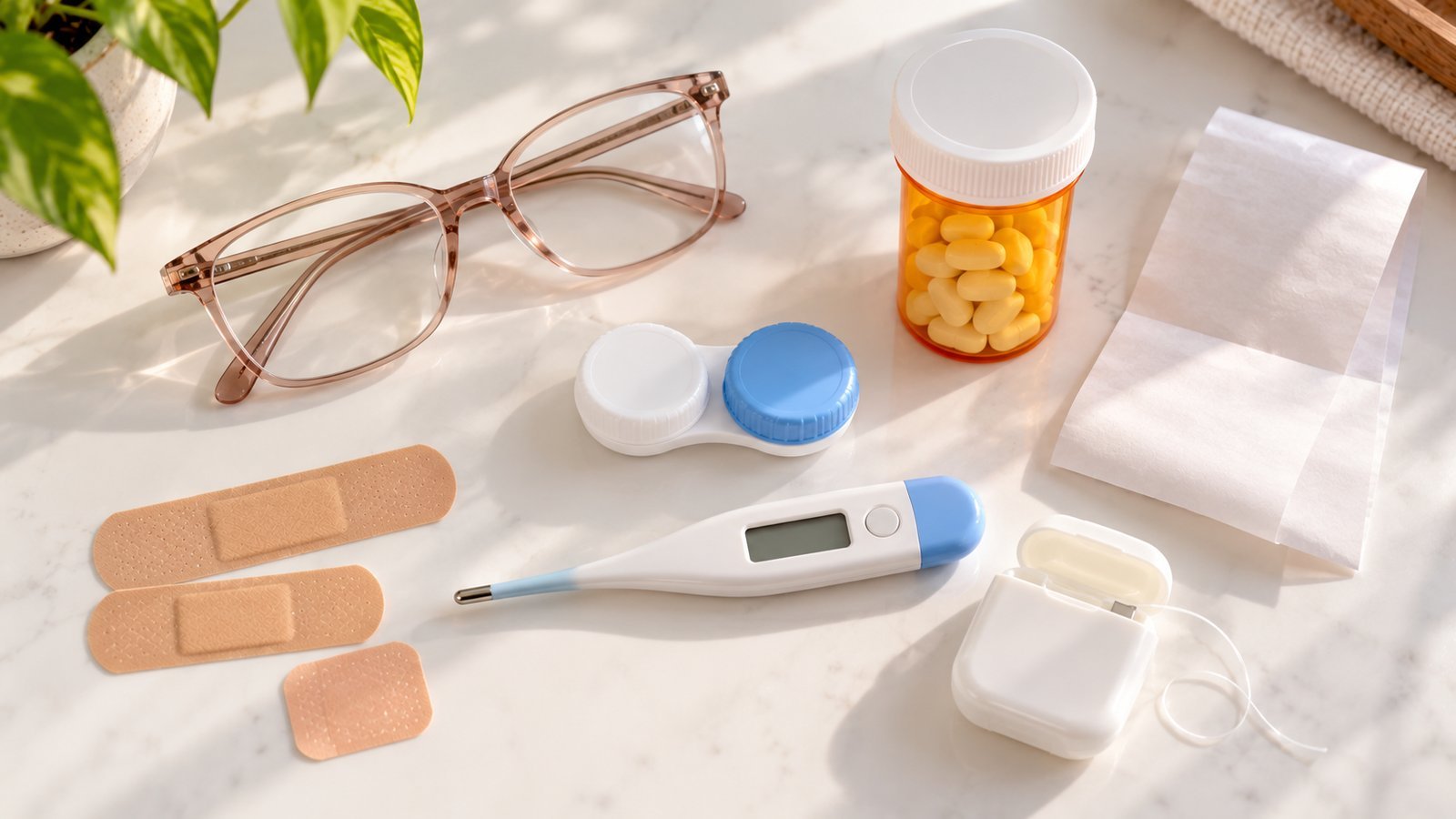
- Vision care, including eye exams, glasses and contact lenses.
- Hearing aids.
- Mental health care.
Insurance premiums are usually excluded
Neither account generally pays health insurance premiums. Publication 969 lists exceptions for HSAs: COBRA premiums, coverage while you receive unemployment benefits, qualified long-term care insurance within limits, and, once you are 65 or older, Medicare premiums and other health coverage other than a Medicare supplement policy.
Preventive services and your plan
Many preventive services are covered by the health plan itself at no cost when you use in-network providers, so you may not need account money for them at all. A high-deductible health plan (HDHP) can cover preventive care before the deductible without affecting your HSA eligibility. Save the account for out-of-pocket expenses the plan does not fully pay, such as the deductible, dental and vision care, and prescriptions.
Penalties for other uses
HSA withdrawals for non-medical purposes are taxed as income and generally face an extra 20% tax. After age 65, or if you become disabled, the extra 20% no longer applies, though the withdrawal is still taxed. FSA money simply cannot be used for non-qualified expenses.
Qualified Medical Expenses in Real Life
IRS rules define medical care broadly, but everyday questions tend to fall into a few groups.
Doctor visits, prescriptions and over-the-counter medications
Doctor visits, specialist copays, deductible coinsurance and prescription medications are the most common uses. Since the CARES Act, the IRS treats over-the-counter medications as qualified without a prescription, along with menstrual care products, for amounts paid after December 31, 2019. Keep the receipt either way, since your benefits administrator or the IRS may ask for it.
Medical equipment and supplies
IRS Publication 502 includes the cost of equipment, supplies and diagnostic devices needed for medical care. Examples include crutches, blood sugar test kits, bandages and breast pumps. Medical supplies bought for general wellness, rather than a medical condition, do not qualify.
Mental health services
Mental health services, such as therapy with a licensed provider and psychiatric care, count as medical care under Publication 502. If your plan covers part of the visit, the account can pay your share.
When you need a letter of medical necessity
Some items qualify only when they treat a specific condition, and plan administrators may ask for a letter of medical necessity from your provider before they reimburse them. The IRS warned in 2024 (IR-2024-65) that some companies market doctor’s notes based only on self-reported information to make food, wellness or exercise purchases look eligible, and that such a letter of medical necessity does not turn a personal expense into a medical one. Food, for example, qualifies only in narrow cases the IRS describes in its nutrition and wellness FAQs.
Watch for scams
Because HSA and FSA cards hold real money, they attract the same phishing and social engineering scams as bank cards. Your administrator will not ask for your full card number or password by text or an unexpected call. If a message pushes you to “verify” your account or buy something now with pre-tax dollars, log in through the provider’s own app or website instead of the link.

Paying With Your Account: Debit Cards, Receipts and Reimbursement
Most HSA providers and many FSA plans issue a debit card linked to the account, so you can pay at a pharmacy, dentist or doctor’s office directly. You can also pay out of pocket and reimburse yourself from the account.
Keep your receipts
With an FSA, the plan administrator must confirm that each expense qualifies, so you may be asked to upload a receipt or explanation of benefits after a debit card purchase. If you do not, the card can be suspended. With an HSA, no one checks at the time of purchase, but Publication 969 says you must keep records showing that withdrawals were for qualified medical expenses, in case the IRS asks. A folder or app with every receipt and EOB is the simplest protection.
Reimbursing yourself later
HSA funds can reimburse you for a qualified medical expense you paid out of pocket, as long as the expense was incurred after the HSA was established. Publication 969 sets no deadline for that reimbursement. Some people pay small bills from regular savings, keep the receipts and leave the HSA invested, then reimburse themselves years later. FSA reimbursements, by contrast, must be claimed within the plan’s run-out period.
What happens with a non-qualified purchase
If you accidentally use an HSA debit card for something that does not qualify, contact your HSA provider. Many allow you to return the money as a mistaken distribution. If it stays out, the amount is added to taxable income and, before age 65, generally faces the extra 20% tax.

Can You Have Both?
Usually not in their standard forms. A general-purpose health FSA counts as disqualifying coverage, so it ends your eligibility to contribute to an HSA. That includes a spouse’s general-purpose FSA that can reimburse your expenses.
The limited-purpose FSA workaround
Many employers that offer HSA-eligible plans also offer a limited-purpose FSA that covers only dental and vision costs. That kind of FSA does not affect HSA eligibility, so you can fund both: use the FSA for predictable dental and vision bills and let the HSA grow.
HSA with a Marketplace plan
Since 2026, Bronze and Catastrophic plans bought on the Marketplace can count as HSA-eligible, as explained above. If you buy a Marketplace plan on your own, there is no payroll deduction, so you open the HSA yourself and deduct contributions on your tax return. Health reimbursement accounts, usually called health reimbursement arrangements, are employer-only, so Marketplace shoppers will not see them.
Dependent care FSAs are separate
A dependent care FSA pays for child care or adult day care so you can work. It does not cover medical costs and does not affect HSA eligibility. Under the 2025 budget law, the annual exclusion for dependent care assistance rose to $7,500 starting in 2026, or $3,750 for married people filing separately, though employers must update their plans to allow the higher amount.
What about an HRA?
Some employers offer a health reimbursement arrangement (HRA) instead, funded only by the employer, which reimburses medical care costs under rules the employer sets. For 2027, an excepted benefit HRA can make up to $2,250 newly available for the plan year, according to Revenue Procedure 2026-24. Whether an HRA is compatible with an HSA depends on its design.

HSAs and FSAs for Self-Employed People
If you work for yourself, the choice is usually made for you.
Health FSAs are not available to owners
Health FSAs are offered through employer cafeteria plans, and IRS Publication 15-B explains that self-employed people, including sole proprietors, partners and more-than-2% shareholders of an S corporation, are not treated as employees for cafeteria plan purposes. That means business owners generally cannot put their own money into a health FSA on a pre-tax basis, even if they offer one to their employees.
HSAs work well for the self-employed
HSA eligibility depends on your health coverage, not your job. If you are self-employed and covered by an HSA-eligible plan, including a Marketplace Bronze or Catastrophic plan, you can open an HSA with any trustee and deduct contributions on your federal return using Form 8889. You can take the deduction even if you do not itemize. Self-employed people cannot run HSA contributions through their own payroll as an employee would, so the deduction saves income tax but not self-employment tax.
HSAs, FSAs and Medicare
Turning 65 changes the picture for HSA owners.
Contributions stop at Medicare enrollment
Once you are enrolled in any part of Medicare, you can no longer contribute to an HSA. You can still spend the money already in the account, including on Medicare premiums.
Watch the retroactive start date
If you sign up for Medicare Part A after age 65, your Part A coverage can start up to six months earlier. Contributions made during those retroactive months may count as excess contributions, which face a 6% excise tax each year they stay in the account. People who plan to keep working past 65 often stop HSA contributions in advance of enrolling; our article on how employer insurance and Medicare work together after 65 covers the timing.
FSAs and Medicare
Medicare enrollment does not by itself end FSA participation. If you are still working and your employer offers an FSA, you can generally keep using it.

Which Account Should You Use?
The right answer depends on your health plan, your expected costs and how much you can set aside. A few common situations help frame the decision.
An HSA usually fits when
- You are enrolled in, or choosing, an HSA-eligible high-deductible, Bronze or Catastrophic plan.
- You can afford to set money aside and want it to grow over time.
- You may change jobs or want the account to stay with you.
- You want a way to save for health costs in retirement.
An FSA usually fits when
- Your employer’s plan is not HSA-eligible, which rules out an HSA.
- You have predictable yearly costs you know you will spend.
- You face a large expense early in the year and want access to your full election right away.
Questions to ask before enrolling
- Is my health plan HSA-eligible? If not, an HSA is off the table.
- Does my employer contribute to an HSA or FSA? Employer money is part of the comparison.
- What will I realistically spend next year on prescriptions, dental, vision and planned care?
- Could I cover my plan’s deductible if I needed care before the HSA had much money in it?
- Does my employer’s FSA offer a grace period or carryover?
- Is a limited-purpose FSA available alongside the HSA?
The deductible matters as much as the account. Our explainer on deductibles, copays, coinsurance and out-of-pocket maximums explains how a high-deductible plan’s costs build up over a year, and our comparison of HMO, PPO, EPO and POS plans explains why an HSA-eligible plan can still come in any network type.

Frequently Asked Questions
What is the main difference between an HSA and an FSA?
An HSA is your own account, rolls over every year and requires an HSA-eligible health plan. An FSA is an employer benefit that works with most job-based plans, gives you the full annual amount up front and is generally use-it-or-lose-it.
What are the HSA contribution limits for 2027?
$4,500 for self-only coverage and $9,000 for family coverage, plus $1,000 more if you are 55 or older, according to IRS Revenue Procedure 2026-24.
What is the FSA limit for 2026?
$3,400 per employee for plan years beginning in 2026, with a maximum carryover of $680 if the plan allows it. The IRS had not announced 2027 limits as of mid-October 2026.
Can I have an HSA and an FSA at the same time?
Not with a general-purpose health FSA. You can pair an HSA with a limited-purpose FSA that covers only dental and vision, or with a dependent care FSA.
Can I open an HSA with a Marketplace Bronze plan?
Yes. Since January 1, 2026, Bronze and Catastrophic plans are treated as HSA-compatible under the 2025 budget law, as long as you meet the other eligibility rules.
What happens to my FSA if I leave my job?
Coverage generally ends on your last day unless you elect COBRA for the FSA. Spend the money or submit claims for expenses you have already incurred before you leave. An HSA stays with you.
Do I need to keep receipts for my HSA debit card?
Yes. No one checks at the register, but IRS Publication 969 says you must keep records showing your HSA withdrawals paid for qualified medical expenses. FSA plans may ask for receipts after each card purchase.
Can self-employed people have an HSA or FSA?
Self-employed people can have an HSA if they are covered by an HSA-eligible plan and meet the other rules. They generally cannot contribute to a health FSA for themselves, because FSAs run through employer cafeteria plans.
Do HSA contributions lower my state taxes?
In most states, yes. California and New Jersey are notable exceptions that tax HSA contributions and earnings at the state level.
Are over-the-counter medications HSA and FSA eligible?
Yes. Since 2020, over-the-counter medicines qualify without a prescription, and so do menstrual care products. Keep itemized receipts.
Does a letter of medical necessity make any purchase eligible?
No. It can support items that treat a diagnosed condition, but the IRS has warned that a note based only on self-reported health information does not make general wellness, food or exercise purchases qualified medical expenses.

Sources
- IRS Revenue Procedure 2026-24 (2027 HSA, high-deductible plan, direct primary care and excepted benefit HRA amounts).
- IRS Revenue Procedure 2025-32 (2026 health FSA limit and carryover).
- IRS Notice 2026-05 and news release IR-2025-119 (HSA changes under the 2025 budget law).
- IRS Publication 969 (Health Savings Accounts and Other Tax-Favored Health Plans) and Publication 502 (Medical and Dental Expenses).
- IRS Publication 15-B and draft 2026 Form 2441 instructions (dependent care assistance exclusion).
- HealthCare.gov, Health plan categories and HSA-eligible plans.
- IRS Publication 15-B (cafeteria plan rules for self-employed individuals and 2% shareholders); IRS Form 8889 instructions; California Franchise Tax Board and New Jersey Division of Taxation guidance on HSA treatment. Tax-savings figures are illustrative arithmetic.
- IRS, IRS outlines changes to health care spending available under CARES Act (OTC medicines and menstrual products, amounts paid after Dec. 31, 2019); IRS IR-2024-65 and FAQs on nutrition, wellness and general health (letters of medical necessity); IRS Publication 502 (equipment, supplies, mental health care); IRS Publication 15-B (cafeteria plan contributions excluded from FICA wages); HSA Bank, HSA investment options page.